
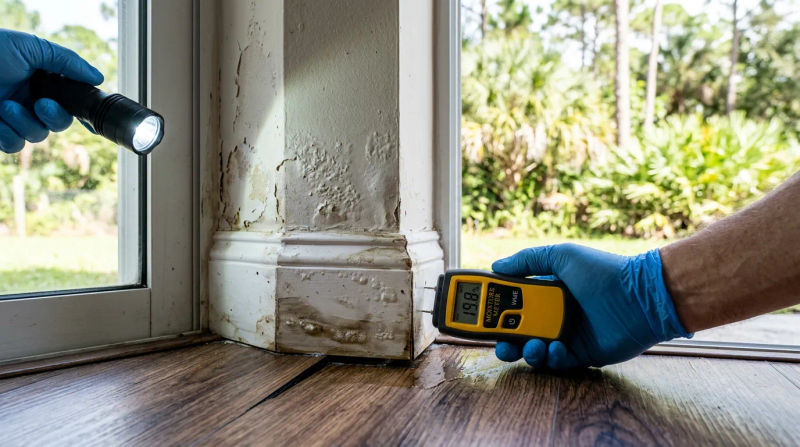
As a project manager with over a decade of experience in residential renovations, I’ve seen firsthand how a small, overlooked detail can become a major project roadblock. Imagine this: you’re excited to finally start that kitchen remodel you’ve been planning. You begin clearing out the old cabinets, and suddenly, a persistent, musty smell hits you. You look down and notice the baseboard behind the old dishwasher looks a little puffy. These are the subtle clues that often point to a much larger, hidden issue: moisture damage.
Here in The Acreage, our hot and humid climate creates the perfect environment for moisture to become trapped within our homes. As we move into October, the slightly drier air can make these lingering odors and subtle signs of water intrusion more noticeable. Before you commit to new flooring or custom cabinetry, it's crucial to play detective and look for the red flags of underlying moisture problems.
Common Signs and Symptoms
Identifying moisture damage signs early is the key to preventing a simple repair from turning into a costly, complex restoration. Our trained crews know that cosmetic fixes are only temporary; the real work lies in diagnosing the source. Here are some of the most common symptoms we encounter:
- A Persistent Musty Odor: This is often the first and most telling sign. That damp, earthy smell is caused by mold or mildew, which thrives in dark, moist environments like wall cavities, under flooring, or inside cabinets.
- Visible Discoloration or Stains: Look for yellowish or brownish water stains on ceilings and walls. They might seem old and dry, but they are evidence of a past or ongoing leak that needs investigation.
- Changes in Surface Texture: Moisture can wreak havoc on finished surfaces. Keep an eye out for bubbling, peeling, or flaking paint. If you press on a section of drywall and it feels spongy or soft, you have a significant problem. This is a clear indicator that professional soft drywall repair The Acreage residents should prioritize, as the material's structural integrity has been compromised.
- Swollen or Warped Woodwork: Wood and wood-composite materials act like sponges when exposed to moisture. Check your baseboards, door casings, and window sills. If they appear swollen, warped, or are separating from the wall, it’s a strong sign of water wicking up from the floor or down from the wall cavity. This often necessitates swollen baseboards replacement The Acreage homeowners should schedule before installing new floors.
- Buckled, Cupped, or Loose Flooring: Whether you have hardwood, laminate, or vinyl, any change in your flooring's shape is a major red flag. Buckling or cupping happens when the flooring absorbs moisture and expands. This points to a problem beneath the floor, such as a slab leak or high humidity. Ignoring this will only lead to the need for a complete buckled floor replacement The Acreage homes might face down the line.
- Condensation on Surfaces: While some condensation is normal in a humid climate, persistent moisture on windows, pipes, or walls can indicate poor ventilation or an active water leak contributing to high indoor humidity.
- Unexplained Increase in Allergies: If your family is experiencing more allergy symptoms, headaches, or respiratory issues at home, it could be a reaction to hidden mold growth.
What Causes This Problem
Understanding the root cause is essential for a permanent solution. In my experience, moisture problems in The Acreage homes, particularly the sprawling custom builds from the 1990s and 2000s, often stem from a few key sources. The large lots and complex layouts of these properties create more potential entry points for water.
- Plumbing Leaks: This is the most common culprit. A slow, undetected drip from a pipe inside a wall, under a sink, or from a toilet supply line can release a surprising amount of water over time.
- Exterior Water Intrusion: Homes in our area, especially those with the complex rooflines popular in the 90s and 2000s, have numerous valleys and flashing points that can fail over time. Clogged gutters, cracked stucco, or improperly sealed windows and doors can also allow rainwater to penetrate the building envelope.
- Appliance Failures: Dishwashers, washing machines, refrigerators with ice makers, and water heaters are all potential sources of slow leaks that can go unnoticed for months, saturating the subfloor and surrounding walls.
- HVAC System Issues: In South Florida, our air conditioners run constantly. A clogged AC condensate drain line is a very frequent cause of water damage. When the line backs up, water overflows the drain pan and can saturate ceilings, walls, and closets.
- Slab Leaks and Ground Moisture: Water can wick up through the concrete slab foundation if a proper vapor barrier wasn't installed or has been compromised. Poor exterior grading on large lots can also direct rainwater toward the foundation, increasing the risk of intrusion.
When to Call a Professional
While a handy homeowner might be tempted to tackle a small stain, it's critical to know when to call for expert help. The difference lies in addressing the symptom versus solving the problem.
Consider DIY only if: The water damage is very small (less than a square foot), you are 100% certain of the source (e.g., a small, immediate spill you cleaned up), and the material is completely dry.
You should call an experienced professional when:
- The Source is Unknown: This is the most important reason. Professionals use tools like moisture meters and thermal imaging cameras to trace moisture to its source without unnecessary demolition.
- You See Structural Red Flags: Any sign of soft drywall, swollen baseboards, or a buckled floor indicates the problem is more than cosmetic. These materials need to be removed and replaced by a team that understands proper remediation techniques.
- A Musty Odor is Present: An odor means mold is likely growing. Proper remediation requires containment and specialized cleaning to prevent spores from spreading throughout your home.
- The Affected Area is Large: Anything more than a few square feet requires a standardized process for drying and repair that our organized crews are equipped to handle efficiently.
- The Damage is Near Electrical Components: Never risk working around outlets or fixtures when water is involved. It’s a serious safety hazard.
A qualified team will follow a systematic process: first, identify and stop the leak; second, thoroughly dry the affected structures; and third, repair and replace the damaged materials to professional standards.
Conclusion
Those seemingly minor issues - a faint smell, a slightly warped board, a paint bubble - are your home’s early warning system. Addressing these moisture damage signs before you begin a renovation is not just a recommendation; it's a necessity for protecting your investment. Painting over a stain or laying a new floor over a damp subfloor will only trap the moisture, leading to more extensive damage, potential mold growth, and wasted time and money.
By taking a proactive approach, you ensure your renovation project is built on a solid, dry foundation. Don’t wait for a small issue to become a major crisis.
If you notice any of these signs, contact a local renovation contractor for an inspection.