
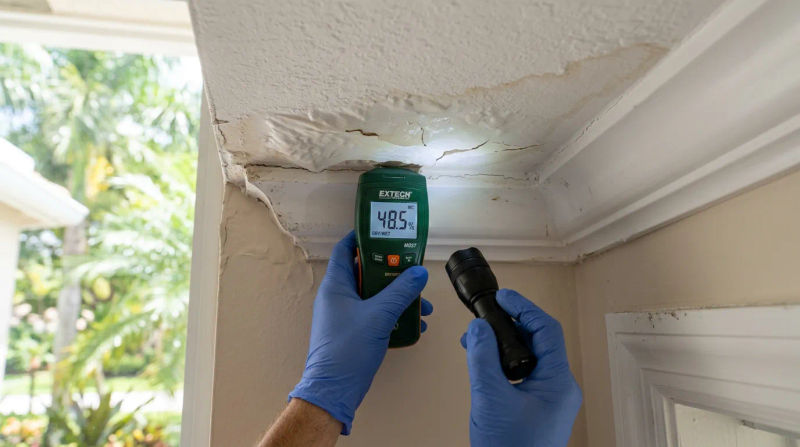
It’s a familiar story for many homeowners in Wellington, especially as we navigate the heavy rains of late hurricane season. You walk into a room after a downpour and notice something isn’t right. Maybe it’s a small, faint stain on the ceiling that wasn’t there before, or perhaps the paint near a window is starting to bubble and peel. With September’s high humidity, it’s easy to dismiss these as minor cosmetic issues. However, these small signals are often the first clues of underlying drywall water damage, a problem that can escalate quickly in our hot, humid climate.
As a project manager with over a decade of experience in residential renovations, I’ve seen firsthand how a small, unnoticed leak can lead to significant structural repairs. Understanding the signs and knowing what causes them is the first step in protecting your home’s integrity and value.
Common Signs and Symptoms
Water damage doesn’t always present as a dramatic ceiling collapse. More often, it starts subtly. Our trained technicians are conditioned to spot these early indicators during inspections, and you can too. The key is to look for changes in the texture and appearance of your walls and ceilings, especially after heavy rainfall.
Here are the most common signs to watch for:
- Bubbling or Peeling Paint: This is one of the most frequent early warnings. When water seeps into the drywall, it separates the paint from the surface below, creating blisters or bubbles. If you’re seeing bubbling paint after rain Wellington residents know so well, it's a clear sign moisture is present behind the finish.
- Swelling or Softness: Drywall, which is made of gypsum plaster pressed between thick sheets of paper, acts like a sponge. When it absorbs water, it swells and loses its structural rigidity. Gently press on a suspect area. If it feels soft, spongy, or crumbles under light pressure, the material is compromised.
- Sagging Ceilings: This is one of the most critical swollen drywall ceiling clues. As drywall absorbs water, it becomes heavy. Gravity pulls it downward, causing it to sag or bow between the ceiling joists. A sagging ceiling is a serious safety hazard and indicates advanced water saturation.
- Discoloration and Stains: Water stains are often yellowish or brown. This discoloration is caused by tannins from the wood framing or paper in the drywall that leach out as water passes through. The stains may appear, fade as the area dries, and then reappear with the next rain, often growing larger over time.
- Musty Odors: If you notice a persistent, earthy or musty smell that you can’t trace to another source, it could be coming from damp drywall. This odor is a byproduct of mold and mildew growth, which thrives in damp, dark, and enclosed spaces like wall cavities.
What Causes This Problem
Identifying the symptom is only half the battle; the real work lies in finding the source of the moisture. Simply patching over a stain without fixing the underlying leak is a temporary fix that guarantees the problem will return. In our experience, water intrusion in Wellington homes, particularly those built in the 1990s and 2000s, often stems from a few common culprits.
Many properties from this era feature beautiful Mediterranean Revival designs with tile roofs and stucco exteriors. While aesthetically pleasing, these features require diligent maintenance to prevent water intrusion.
- Roof Leaks: This is the most obvious cause. Leaks can originate from damaged or slipped roof tiles, failing flashing around chimneys or vents, or deteriorated sealant on roof penetrations. The complex rooflines popular in the area can create valleys and junctions where water can pool and find a way inside.
- Window and Door Leaks: The intense Florida sun and driving rain can degrade the caulk and seals around windows and doors. Water can then seep into the wall assembly, saturating the drywall around the frame. The arched windows common in local architecture can sometimes have unique sealing challenges.
- Stucco and Siding Issues: Stucco is a durable exterior finish, but it's not waterproof. Hairline cracks can develop over time, allowing wind-driven rain to penetrate the wall. If the underlying weather-resistant barrier is compromised, this moisture can become trapped and lead to significant interior drywall water damage.
- Plumbing Failures: A slow drip from a water supply line or a leaking drain pipe inside a wall or ceiling can saturate drywall over a long period. These leaks are often hidden, and the first sign is usually a stain or swollen spot that appears for no apparent reason.
- HVAC Condensation: In our humid climate, air conditioning systems produce a lot of condensation. If the condensate drain line in your attic or an interior closet becomes clogged, the overflow pan can fill up and spill over, soaking the ceiling below.
When to Call a Professional
Once you’ve spotted a problem, the next question is whether you can handle it yourself or if you need professional help. The decision often comes down to the extent of the damage and your ability to confidently identify and fix the source of the leak.
Minor, purely cosmetic stains (smaller than a saucer) where the leak has been definitively stopped and the drywall is completely hard and dry can sometimes be addressed with a good stain-blocking primer and a fresh coat of paint.
However, in most cases involving water, calling for a professional assessment is the safest and most effective course of action. Our teams follow standardized processes to not only repair the damage but also ensure the root cause is resolved. You should contact an experienced professional when:
- The Drywall is Swollen or Soft: If the structural integrity of the drywall is compromised, it cannot be salvaged. It must be removed and replaced to prevent further issues and potential mold growth.
- The Damaged Area is Large: Any water stain larger than a square foot typically indicates a significant amount of moisture has penetrated the wall or ceiling, likely affecting insulation and framing as well.
- You Cannot Find the Leak: This is critical. Professionals have the tools and experience, like moisture meters and thermal cameras, to trace moisture back to its origin point without unnecessary demolition.
- You Suspect Mold: A musty smell or visible dark spots are red flags for mold. Proper remediation requires containment and specialized cleaning procedures to prevent spores from spreading throughout your home.
An experienced contractor can properly assess the situation and advise on the repair vs replace drywall Wellington debate. While a repair might seem cheaper, replacing saturated drywall is often the correct choice for a long-term, healthy solution. Our technicians are trained to carefully cut out damaged sections, inspect the wall cavity, treat any affected framing, and seamlessly blend the new drywall with the existing surface.
Conclusion
Noticing swelling drywall or bubbling paint after rain Wellington weather is more than just an aesthetic annoyance - it's your home’s way of signaling a problem. While it can be tempting to wait and see if it gets worse, a proactive approach is always better. The high humidity in South Florida creates the perfect breeding ground for mold, and a small leak left unaddressed can quickly compromise your home’s structure and indoor air quality.
Pay attention to the subtle clues: the soft spot on a wall, the faint stain on a ceiling, the musty odor in a room. By identifying these signs early and understanding their potential causes, you can take decisive action. Addressing the root cause of the leak and properly repairing the resulting damage will protect your investment and ensure your home remains safe and healthy for years to come.
If you notice any of these signs, contact a local renovation professional for an inspection. They can help you diagnose the problem accurately and recommend the best course of action.