
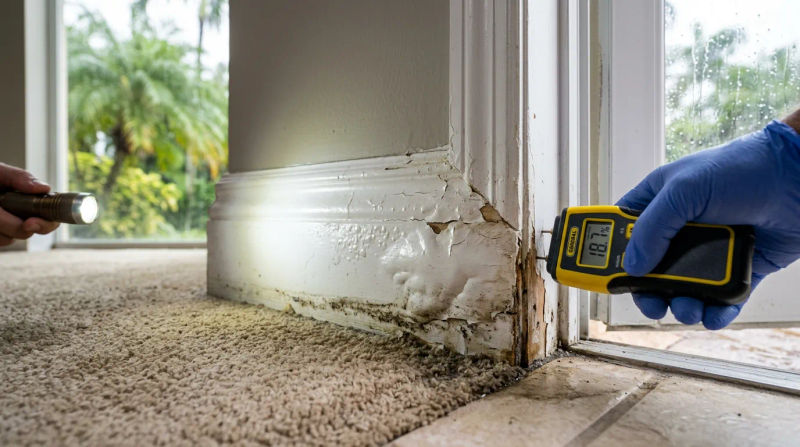
You close the bathroom door and notice it again - that slight resistance, the way it scrapes against the frame just enough to be annoying. A few weeks ago, it closed perfectly. Now, after a stretch of heavy September rain, it sticks. You might also spot that the baseboards near the shower look a little puffy, or the paint near the window is starting to look less like a flat surface and more like a subtle texture. In Davie’s hot and humid climate, these aren't just minor quirks; they are often the first whispers that your home’s interior is struggling with moisture, and they are clear home remodel signs.
As a senior project manager with over a decade of experience in South Florida, I’ve seen how our unique environment, especially during the late hurricane season, can accelerate wear and tear on a home’s interior. What seems like a small cosmetic issue can be a symptom of a much larger problem. Understanding these warning signs is the first step toward protecting your investment and deciding when to remodel interior Florida homes like yours.
Common Signs and Symptoms
Your home communicates its needs through subtle (and sometimes not-so-subtle) changes. Here are seven key interior warning signs that our trained crews frequently encounter, particularly in homes from the 1990s and 2000s common in the Davie area.
- Swollen Baseboards and Door Casings
This is one of the most common humidity damage symptoms Davie homeowners report. When you see swollen baseboards high humidity is almost always the culprit. Wood and medium-density fiberboard (MDF), common materials for trim, are porous. They act like sponges, absorbing ambient moisture from the air, which causes them to expand, warp, and even separate from the wall.
- Peeling, Bubbling, or Blistering Paint
Paint is your home's first line of defense, but it can only do so much. When moisture gets behind the paint - either from high indoor humidity or a small leak in the wall - it breaks the adhesive bond. You’ll see this as bubbles or blisters on walls and ceilings, especially on exterior-facing walls or around windows.
- Doors That Stick or Don't Latch
That sticking door isn't just a seasonal annoyance; it's a barometer for your home's interior humidity. Wood doors swell when they absorb moisture, causing them to bind against the frame. While a little seasonal shift is normal, a door that becomes consistently difficult to open or close points to a persistent moisture issue that needs addressing.
- A Persistent Musty Odor
Your nose knows. If you walk into a room and detect a damp, earthy smell that doesn’t go away with air fresheners, you’re likely smelling mold or mildew. These fungi thrive in damp, dark places - behind baseboards, under cabinets, or within drywall - long before you can see them.
- Warped or Cupping Hardwood Floors
Hardwood floors are beautiful but are particularly susceptible to moisture changes. If you notice the edges of your floorboards are higher than the center (cupping) or the boards are buckling, it indicates a significant moisture imbalance. This could come from the air, a subfloor issue, or a nearby leak.
- Stains on Ceilings or Walls
A yellowish or brownish stain on your ceiling or high on a wall is an unmistakable sign of a water leak. In many Davie homes built in the 1990s and 2000s, the popular Neo-Mediterranean style often included complex rooflines with multiple gables and hips. While architecturally interesting, these create more valleys and potential points of failure where leaks can develop over time.
- Outdated and Inefficient Layouts
Not all remodel signs are about damage. Sometimes, the problem is the house itself. Homes from the 90s often feature closed-off kitchens, formal living rooms that go unused, and master bathrooms with bulky, built-in tubs. If your home’s layout no longer fits your lifestyle, causing daily friction and inefficiency, it’s a strong sign that it’s time for a functional remodel.
What Causes This Problem
Understanding the root cause is critical. Simply painting over a water stain or forcing a swollen door shut is a temporary fix that allows the underlying issue to worsen. In my experience, these problems usually stem from a few key sources.
- Pervasive Ambient Humidity: South Florida's defining characteristic is its humidity. Without a properly sized and maintained HVAC system, your home can’t effectively remove moisture from the air. This constant, high humidity puts a relentless strain on all your interior finishes, leading to the swelling, peeling, and warping we’ve discussed.
- Water Intrusion: Active leaks are a more direct cause. As mentioned, the complex roofs on many 90s-era homes can be prone to leaking as they age. Old window seals, especially around the stylish arched windows of that period, can also fail. Even tiny cracks in exterior stucco can allow wind-driven rain to penetrate the wall cavity, creating hidden moisture problems.
- Poor Ventilation: Kitchens and bathrooms are the biggest sources of interior moisture. If your exhaust fans are old, undersized, or vented improperly (e.g., into the attic instead of outside), all that steam from cooking and showering gets trapped inside your home, contributing to the overall humidity load.
- Aging Building Materials: The materials used to build a home have a finite lifespan. Builder-grade cabinetry, trim, and flooring from 20-30 years ago may simply be reaching the end of their functional life. They become less resilient to moisture and more prone to showing signs of wear and damage.
When to Call a Professional
Homeowners often ask me if they can handle these issues themselves. The answer depends on the scale and nature of the problem.
A small paint touch-up or adjusting a door hinge might be a simple DIY task. However, if the problem is recurring or you see multiple symptoms across different areas of your home, it’s time to call for a professional assessment. Covering up humidity damage symptoms Davie residents see without a proper diagnosis is a recipe for bigger, more expensive problems later.
This is where an organized, process-driven approach is invaluable. When our technicians investigate these issues, they aren't just looking at the swollen baseboard; they are using moisture meters and their experience to trace the problem to its source. Is it a ventilation issue? A slow leak from a window? Or is the HVAC system simply not keeping up?
Deciding when to remodel interior Florida homes often comes down to this: are you fixing a single, isolated problem, or are you fighting a systemic issue? If moisture is affecting multiple finishes and rooms, a comprehensive remodel may be more effective and economical in the long run than a series of small, frustrating repairs.
Conclusion
Your home is a dynamic system, constantly interacting with our demanding South Florida climate. Signs like swollen baseboards high humidity, sticking doors, and peeling paint are more than just cosmetic flaws - they are important signals that your home's interior environment is out of balance. The homes in Davie, many from a period of rapid expansion in the 90s and 2000s, are now at an age where these systemic issues often begin to surface.
Paying attention to these early home remodel signs and addressing them proactively can save you from far more extensive and costly damage down the road. Don't wait for a small annoyance to become a major failure. A thorough evaluation can uncover the root cause and provide a clear path forward to restoring the health, beauty, and functionality of your home.
If you notice any of these signs in your home, we recommend contacting a local, qualified renovation professional for a comprehensive inspection.